
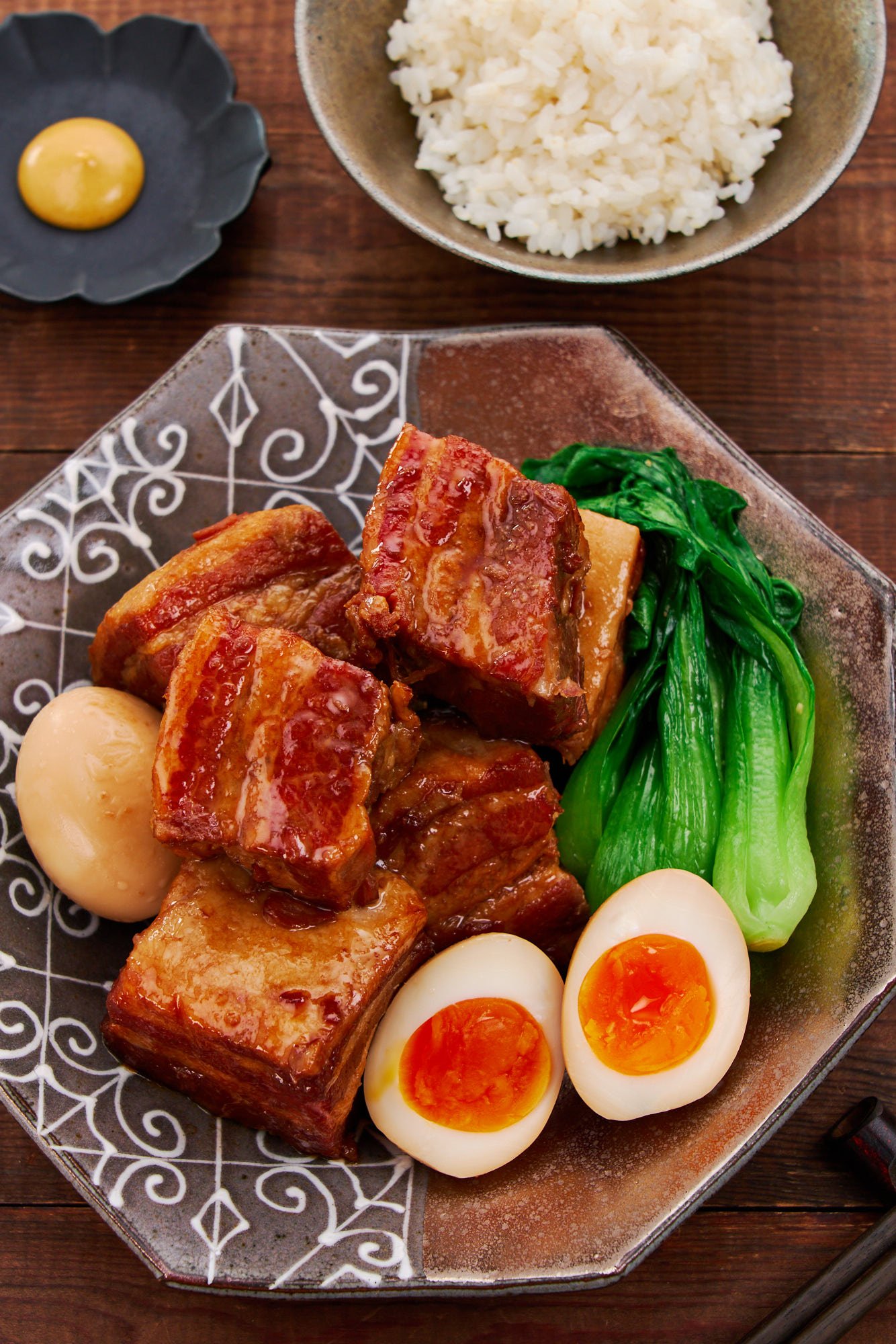
Japanese braised pork belly, or buta no kakuni (豚の角煮-literally "simmered cubes"), is one of those magical dishes that transforms an inexpensive cut of pork into something so luxuriously tender it melts in your mouth. Inspired by Chinese Dongpo Pork, which arrived in Japan through Ming Dynasty trade with the port of Nagasaki, it evolved into distinct regional variations-Nagasaki's tōbani (東坡煮), with its deep, soy-forward flavor, and Okinawa's rafute, which uses the island's signature rice spirit, awamori, for a mellow yet subtly nutty finish. My version takes a balanced approach: parboiling the pork first to ensure clean flavors, then slow-braising it until irresistibly soft, followed by an overnight soak to let the flavors fully develop. The result? A deeply satisfying braised pork belly recipe that's rich, refined, and endlessly versatile.
Jump to:
Why This Recipe Works
- Parboiling the pork belly before cutting helps it retain its shape during braising by pre-shrinking the meat while also reducing impurities, minimizing the need for constant skimming.
- A combination of dashi stock and reserved boiling liquid from the pork creates a deeply umami-rich base, enhancing the depth of flavor in the braising liquid.
- Allowing the pork belly to rest overnight in the braising liquid ensures every bite is infused with rich, savory flavor, doubling as a marinade for soft-boiled eggs.
- Reducing the braising liquid while reheating intensifies the flavors and forms a glossy, caramelized glaze that clings beautifully to the braised pork belly.
Ingredients
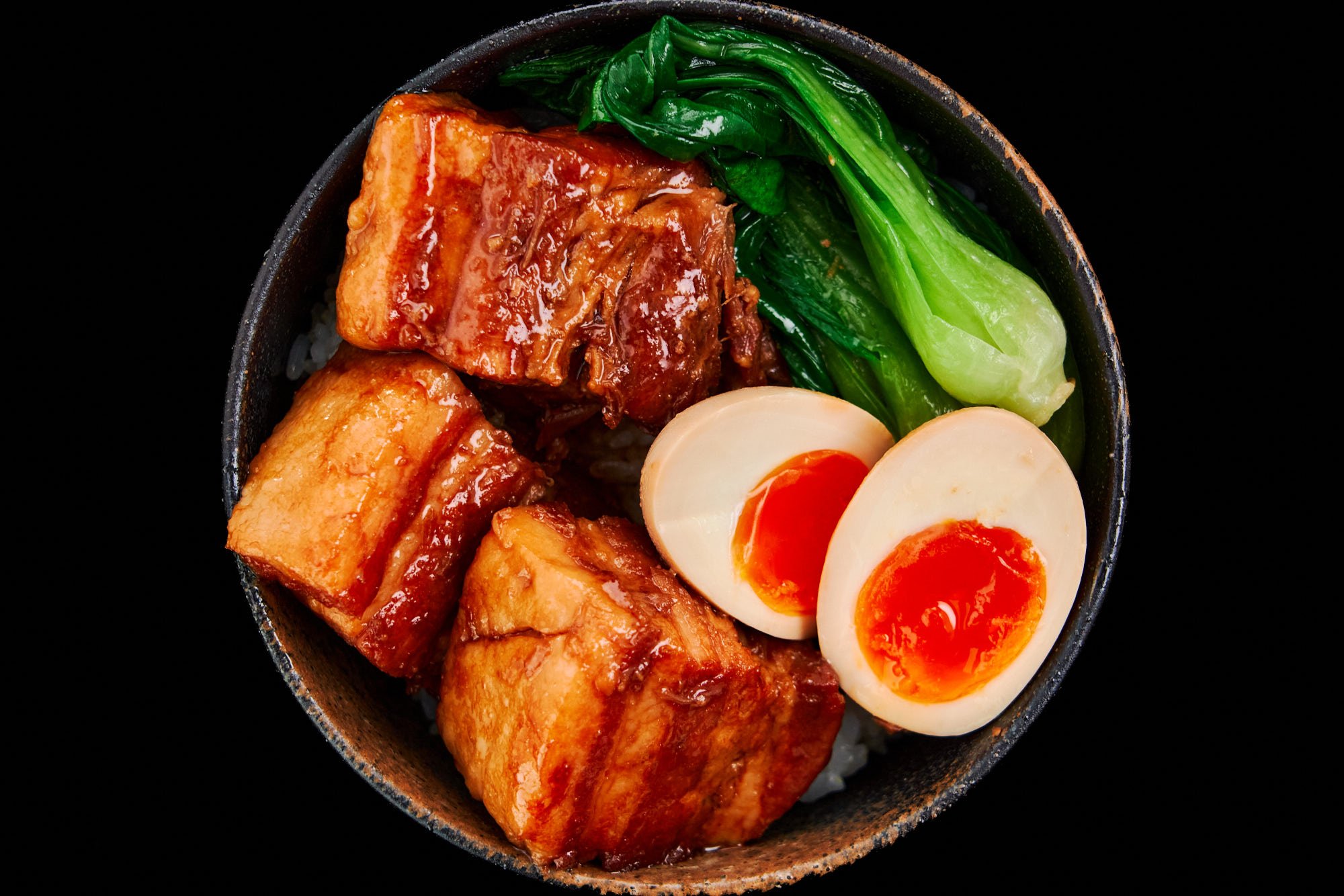
- Pork Belly - This often-overlooked cut of pork is the heart of this kakuni recipe, with its luscious layers of fat and marbled meat creating the perfect balance of richness and tenderness. In Japan, it's known as sanmainiku (三枚肉), meaning "three-layer meat," a name that serves as a guide for selecting the best cut. Look for a piece with evenly distributed layers of fat and meat-too much meat and your kakuni may turn out dry and tough; too much fat, and it risks becoming overwhelmingly greasy.
- Dashi - This umami-packed broth is one of the key ingredients for the braising liquid, enhancing the depth of flavor in this braised pork belly recipe while giving it a distinctly Japanese flair.
- Sake - Helps neutralize any gamey odors from the pork while adding umami due to its high concentration of natural amino acids. Chinese cooking wine, such as Shaoxing, will work as a substitute. While it won't provide as much umami, Okinawan Awamori can be used as a substitute to add a deep, nutty flavor.
- Soy Sauce - As the primary seasoning, soy sauce provides the perfect balance of salt and deep umami while giving this Japanese braised pork belly recipe its signature mahogany color. Japanese dark soy sauce (koikuchi shoyu) is ideal, enhancing the dish with a richer, more complex flavor and a hint of natural sweetness.
- Dark Brown Sugar - Dark brown sugar helps balance the savory depth of the braising liquid while adding complimentary earthy flavors. I like using kokutō (Okinawan black sugar), which has deep molasses notes and a complex, almost smoky sweetness that pairs beautifully with the dark soy sauce. Any natural sugar such as muscovado, panela, or jaggary will work, and if you're in a pinch, rock sugar or granulated sugar will work.
- Ginger - Fresh ginger helps cut through the richness of the fatty pork belly, adding warmth and a hint of spice.
- Garlic - While kakuni is traditionally prepared with green onions, I prefer the robust flavor of garlic cloves. It deepens the savory complexity of this flavorful dish while helping to neutralize the gamey notes in the pork. You could substitute other members of the allium genus here, like yellow onions, shallots, or scallions.
- Soft-Boiled Eggs - This is optional, but I love adding soft-boiled eggs to my buta kakuni. Letting them soak overnight in the braising liquid infuses them with rich flavor while keeping the golden yolks jammy.
How to Make Japanese Braised Pork Belly
Start your buta no kakuni prep by parboiling the pork belly. Bring a large pot of cold water to a rolling boil, then carefully add your slab of pork belly. Simmer it for about 30 minutes, covering it with a lid. This step removes excess blood, proteins, and impurities and pre-shrinks the meat, helping the cubes maintain their shape during braising. Remove the pork and let it cool until it's easy to handle. Be sure to reserve a few cups of boiling liquid, then drain and rinse the pot.
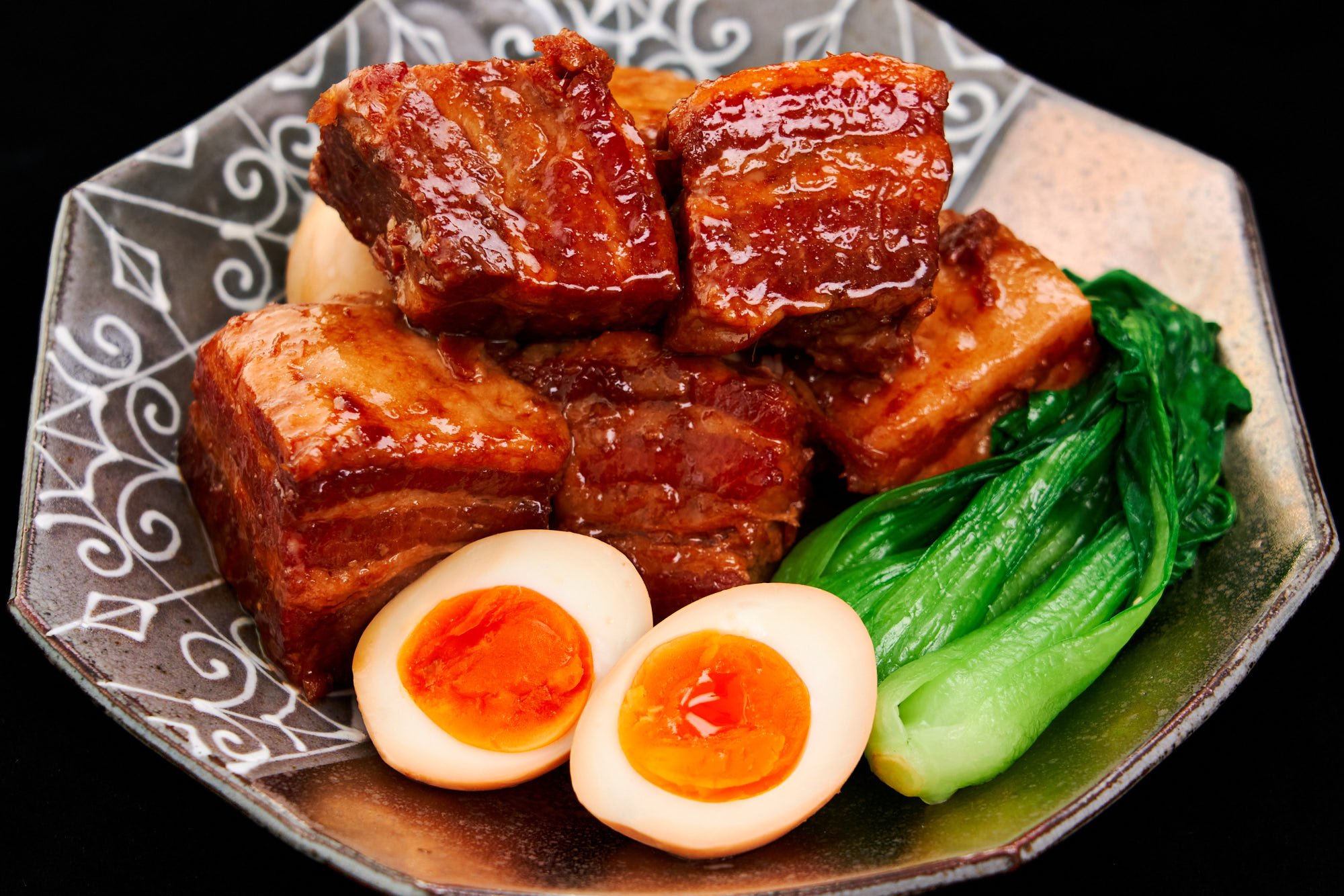
Cut the pork into large, even cubes (about 2 ½ inches) and arrange them in a single layer in your pot. Add the fresh ginger, garlic, dashi, sake, soy sauce, and dark brown sugar. If needed, add some of the reserved boiling liquid from earlier to ensure the pork is fully submerged in the broth. Turn the stove onto high heat and bring the mixture to a full boil. Skim off any foam or impurities that rise to the surface. Reduce the heat to maintain a gentle simmer, and cover the pot with the lid slightly ajar. Let the pork braise for about an hour and a half to two hours, or until the meat is fork-tender and the fat has turned silky and translucent.
Transfer the pork kakuni to an airtight storage container, then strain the braising liquid through a fine-mesh sieve to remove any solids. For the best flavor, let the Japanese braised pork belly rest in the strained braising liquid overnight. This resting period allows the flavors to fully penetrate the pork, ensuring every bite is seasoned to the core. It's also the perfect opportunity to marinate soft-boiled eggs, infusing them with deep umami while keeping the yolks luxuriously jammy.
To serve your Japanese pork belly, transfer the meat and braising liquid to a pan and gently reheat over medium heat. Once the meat is reheated, turn up the heat and reduce the liquid into a thick, glossy glaze. Add the marinated eggs at the end to warm them through. Serve the kakuni piping hot with steamed rice and spicy mustard on the side for a sharp contrast.
How to Serve Kakuni
While this Kakuni is incredible on its own, it's a versatile protein that can be used in a variety of ways. For a hearty lunch, turn this into a kakuni don (pork rice bowl), where the tender, soy-braised pork is served over a bed of warm rice, drizzled with extra sauce and a marinated soft-boiled egg. It also makes for a luxurious kakuni ramen-just nestle a few glistening cubes on top of the noodles and broth for an instant upgrade. If you find yourself with leftovers, dice them up and toss them into yakimeshi (Japanese fried rice) for an irresistibly umami-packed twist.

Serve it With
A bowl of steamed Japanese short-grain rice is the classic pairing, but for something different, try serving this alongside my soupless tantanmen for a bold, spicy contrast. A spicy smashed cucumber salad brings a refreshing crunch, while a green salad with sesame dressing adds a nutty, crisp complement. For a more delicate vegetable side, spinach ohitashi offers a refined, umami-rich option. To round out the meal, a comforting bowl of gyoza soup-filled with tender dumplings in a light, savory broth-adds warmth and balance.
📖 Recipe





Units
Ingredients
- 1400 grams skinless pork belly
- 2 cups dashi
- ½ cup sake
- 4 tablespoons soy sauce
- 3 tablespoons dark brown sugar
- 40 grams fresh ginger (2 inch length sliced into coins)
- 20 grams garlic (~2 very large cloves)
- 6 soft boiled eggs
Instructions
- Bring a large, heavy-bottomed pot of water to a full boil and add 1400 grams skinless pork belly. Cover and turn down the heat to maintain a gentle simmer. Cook the pork belly for 30 minutes.

- Remove the pork from the pot and let it cool enough to handle. Save 2-3 cups of the boiling liquid. Then drain and wash out the pot.
- Cut the pork belly into cubes (about 2 ½-inches) and line them up in the clean pot. Add 40 grams fresh ginger, 20 grams garlic, 2 cups dashi, ½ cup sake, 4 tablespoons soy sauce, and 3 tablespoons dark brown sugar. Add some of the reserved boiling liquid in if needed to ensure the pork belly pieces are fully submerged.
- Turn the stove onto high heat and bring the mixture to a full boil. Skim off any foam that comes to the surface.
- Reduce the heat to a gentle simmer and cover the pot with the lid slightly ajar. Braise the pork for 1 ½ to 2 hours. The cooking time will vary depending on your cut of meat.
- When the pork belly is tender enough to pierce with a fork easily, transfer it to a storage container.
- Skim off as much fat from the braising liquid as possible and then strain the liquid through a fine mesh sieve into the container with the pork belly.
- When the braised pork belly has cooled to room temperature, add the peeled 6 soft boiled eggs. Cover the container and refrigerate the buta kakuni overnight.
- When you're ready to serve the braised pork belly, transfer it to a pan, along with the braising liquid (it may have gelled). Reheat the pork kakuni over medium heat, flipping the cubes over periodically until it's warmed through.
- Turn the stove up to high heat and let the savory sauce boil until it thickens. Roll the simmered pork belly cubes around to glaze evenly, and then add the eggs at the end to reheat lightly.


John N says
Hey Marc,
I was searching for a pork belly recipe and found this. Can't wait to give it a try. Plus we worked together at InterX and Webcomplete, California.....small world....Keep up the great work.
Marc Matsumoto says
John🤯, small world indeed. Haven't heard the name InterX in a while, and Webcomplete... was that a.k.a. The Web Outlet? Drop me an email, would be great to hear what you've been up to. Enjoy the pork!
Gail says
I've tried several recipes that include mirin; why do you choose not to use it?
Marc Matsumoto says
Hi Gail, mirin is a fantastic ingredient if you have access to a genuinely brewed one, but most mirin sold outside of Japan is just alcohol with corn syrup and flavorings. In this case you're better off using sake with a sweetener which is why I use sake in most of my recipes.
Gail says
Appreciate your reply. I understand what you're saying about the mirin; just checked my bottle. Thank you so much. I'm trying your recipe today.